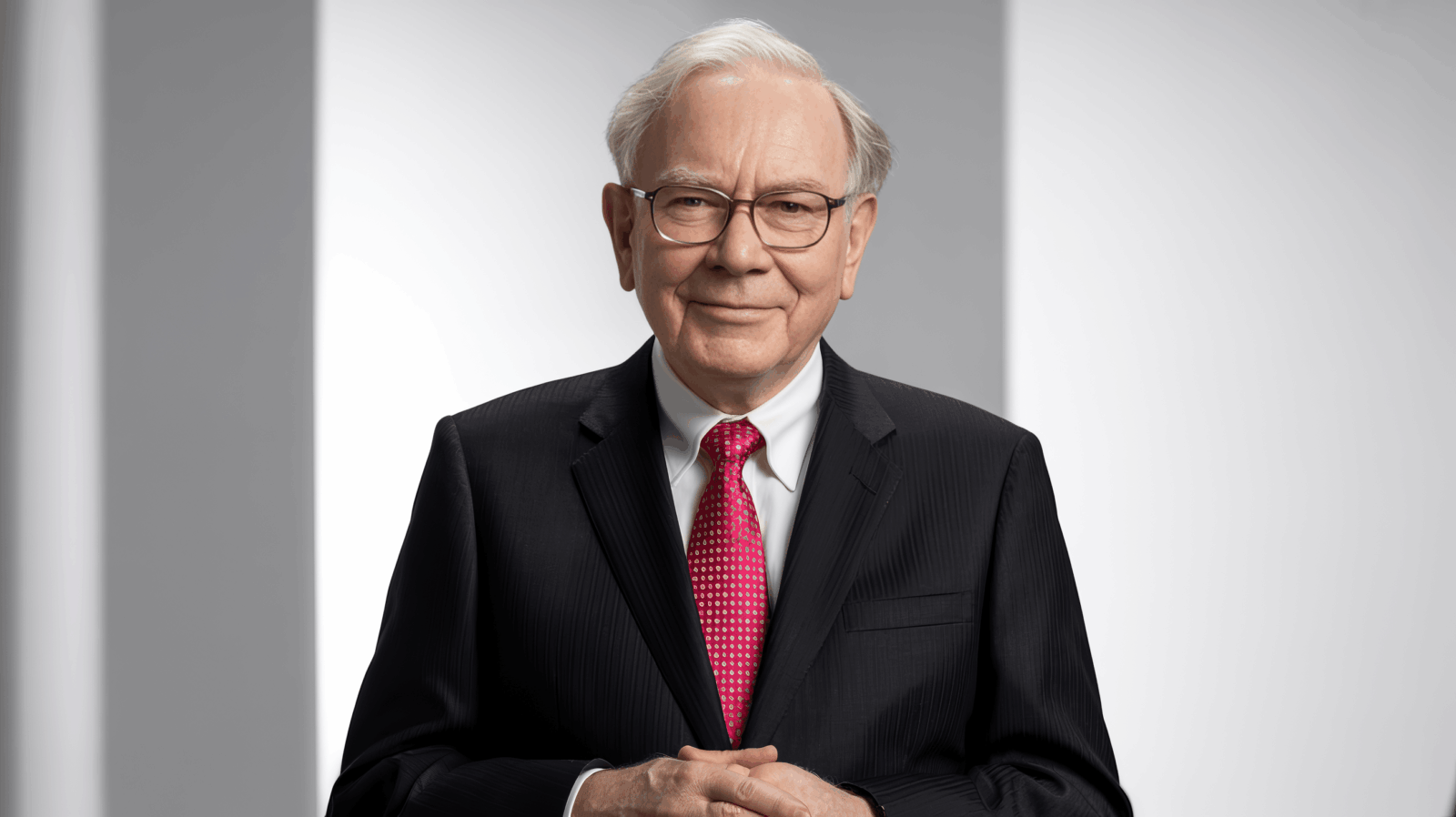
Warren Buffett didn’t write his money rules in a single instruction manual. They’re scattered across six decades of Berkshire Hathaway shareholder letters, university lectures, and the legendary Q&A sessions at the annual meeting in Omaha.
What emerges from all that material is a coherent philosophy built on patience, discipline, and an almost stubborn refusal to do what everyone else is doing. These are the ten laws of wealth that have guided one of the greatest capital allocators in history.
1. Never Lose Money
“Rule No. 1: Never lose money. Rule No. 2: Never forget rule No. 1.” – Warren Buffett
This isn’t a promise that stock prices won’t fall. It’s a mindset that prioritizes capital preservation over return chasing.
The math is brutal and unforgiving when you lose money. A 50% loss requires a 100% gain to break even, which is why Buffett treats every dollar of principal as something to be protected before it’s deployed.
2. Know the Difference Between Price and Value
“Price is what you pay. Value is what you get.” – Warren Buffett
The market quotes you a price every second of every trading day, but that price is just an offer. The actual value of a business is something separate, calculated from its earnings, assets, and competitive position.
Buffett built his career on the gap between these two numbers. He calls it a margin of safety, buying a dollar of value for fifty or sixty cents so that even his mistakes leave him with a workable outcome.
3. Stay Within Your Circle of Competence
“Risk comes from not knowing what you’re doing.” – Warren Buffett
Buffett doesn’t try to understand every industry on earth. He focuses on businesses he can genuinely evaluate and ignores the rest, no matter how exciting they look.
The size of your circle matters less than knowing where its edges are. An investor who understands ten businesses deeply will outperform one who dabbles in a hundred they can’t explain to a friend over coffee.
4. Let Compounding Do the Heavy Lifting
“Someone’s sitting in the shade today because someone planted a tree a long time ago.” – Warren Buffett
Buffett has credited his results to living in America, lucky genes, and compound interest. The third item is the one available to everyone willing to be patient.
Time is the ingredient most investors refuse to give to their money. Buffett started buying stocks as a child, and the bulk of his fortune accumulated after he turned sixty-five, which tells you everything about how compounding actually works.
5. Buy Fear, Sell Greed
“We simply attempt to be fearful when others are greedy and to be greedy only when others are fearful.” – Warren Buffett
Markets swing between euphoria and panic, and most participants get pulled along for the ride. They buy at peaks because everyone else is buying, and they sell at bottoms because everyone else is selling.
Buffett does the opposite by design. He treats market crashes as clearance sales on quality businesses, and bull-market manias as warnings to stop buying rather than invitations to pile in.
6. Hold Forever When the Business Is Excellent
“Our favorite holding period is forever.” – Warren Buffett
Buffett doesn’t think of himself as a trader who buys and sells stocks. He thinks of himself as a part-owner of real businesses, and owners don’t sell every time the price moves.
Holding for decades minimizes taxes and transaction costs while letting the underlying business grow your stake organically. The compounding within great companies works that no amount of clever trading can replicate.
7. Avoid Leverage
“I’ve seen more people fail because of liquor and leverage.” – Warren Buffett
Borrowing money to invest amplifies your returns in good years and destroys you in bad ones. Buffett’s view is that if you’re smart enough to invest well, you don’t need debt to get rich, and if you aren’t, debt will accelerate your ruin.
Berkshire Hathaway has always operated with substantial cash reserves on its balance sheet. That cushion is what lets Buffett act aggressively when other investors are forced to sell at any price they can get.
8. Focus on Productive Assets
“The stock market is a device for transferring money from the impatient to the patient.” – Warren Buffett
Buffett draws a sharp line between assets that produce something and assets that sit there hoping someone will pay more for them later. Gold and speculative collectibles fall into the second category in his framework.
Productive assets, such as farms, apartment buildings, and operating businesses, generate cash flow that grows over time. That cash is what builds wealth, not the hope that a future buyer will be more enthusiastic than the current one.
9. Invest in Yourself First
“The best investment you can make is in yourself.” – Warren Buffett
Buffett tells students that improving communication skills alone can meaningfully raise their lifetime earnings. Knowledge, skills, and personal development can’t be taxed, inflated away, or wiped out in a market crash.
This is the foundation that makes every other rule possible. The income you earn from your skills is the raw material you’ll later deploy into businesses, real estate, and index funds, and a larger income gives you a larger pool to compound.
10. Integrity Is Non-Negotiable
“Lose money for the firm, and I will be understanding; lose a shred of reputation for the firm, and I will be ruthless.” – Warren Buffett
Buffett looks for three qualities when he hires managers: intelligence, energy, and integrity. He’s noted that without the third, the first two become genuinely dangerous because a smart and energetic crook will do far more damage than a lazy one.
The same principle applies to your own financial life. A reputation built over decades can be destroyed in an afternoon, and no investment return is worth that trade.
Conclusion
These ten rules don’t require genius, insider information, or a finance degree. They require patience, honesty about what you know, and the discipline to act differently from the crowd when it counts.
The investors who follow them tend to look boring for years at a time, then look brilliant in the decades that follow. Buffett’s “test” remains the cleanest summary of the entire philosophy, which is that if you aren’t willing to own a stock for ten years, you shouldn’t own it for ten minutes.
PakarPBN
A Private Blog Network (PBN) is a collection of websites that are controlled by a single individual or organization and used primarily to build backlinks to a “money site” in order to influence its ranking in search engines such as Google. The core idea behind a PBN is based on the importance of backlinks in Google’s ranking algorithm. Since Google views backlinks as signals of authority and trust, some website owners attempt to artificially create these signals through a controlled network of sites.
In a typical PBN setup, the owner acquires expired or aged domains that already have existing authority, backlinks, and history. These domains are rebuilt with new content and hosted separately, often using different IP addresses, hosting providers, themes, and ownership details to make them appear unrelated. Within the content published on these sites, links are strategically placed that point to the main website the owner wants to rank higher. By doing this, the owner attempts to pass link equity (also known as “link juice”) from the PBN sites to the target website.
The purpose of a PBN is to give the impression that the target website is naturally earning links from multiple independent sources. If done effectively, this can temporarily improve keyword rankings, increase organic visibility, and drive more traffic from search results.